How Fisher & Paykel DishDrawer status lights communicate faults, which checks are owner-safe, and when drawer electronics need testing.
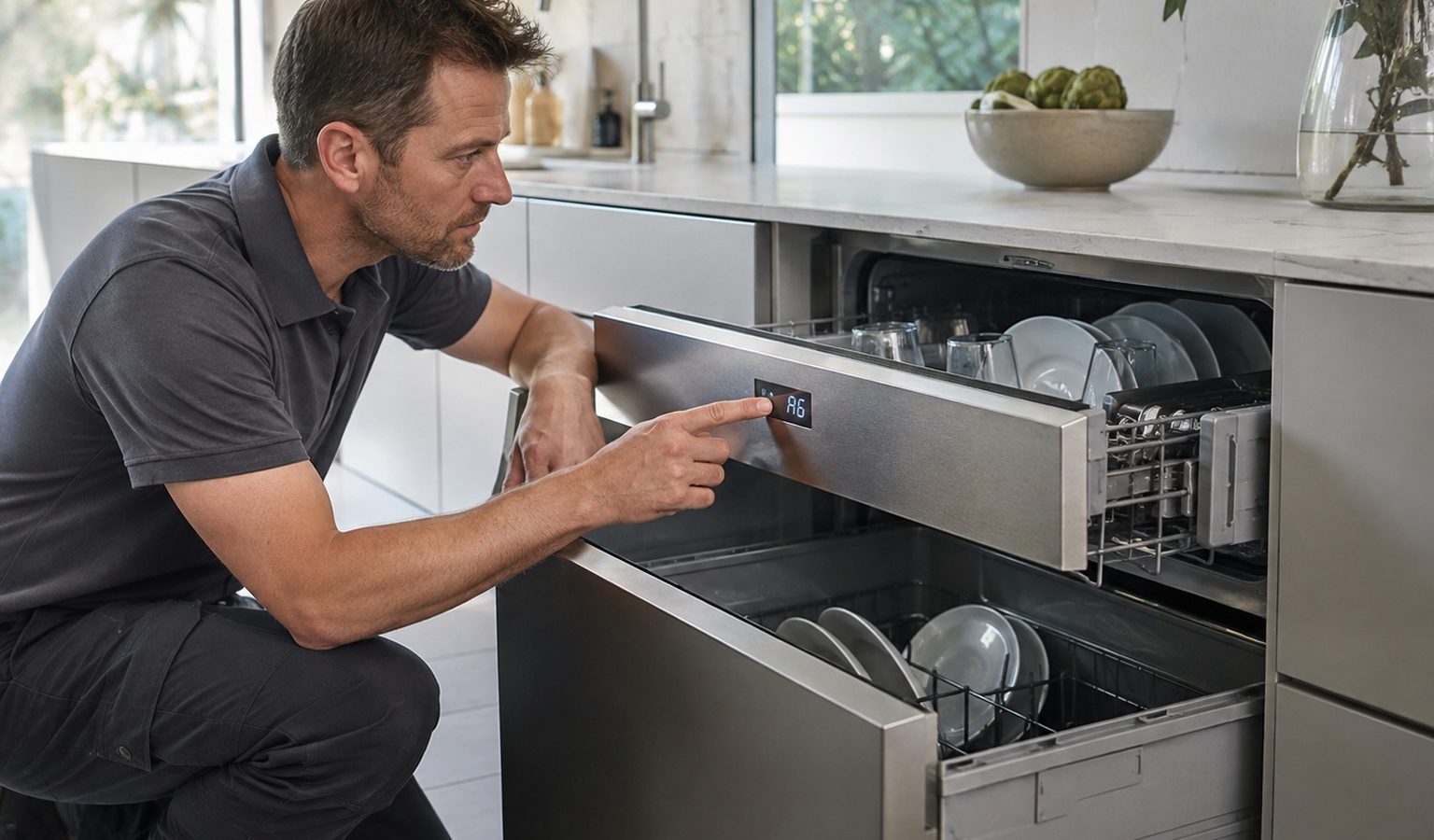
DishDrawer dishwashers rarely put a long sentence on a screen. More often, a single indicator blinks in a pattern that owners miscount under stress.
Because each drawer is essentially its own wash system, a fault on the top drawer does not automatically explain a problem on the bottom. Treat them as separate appliances sharing a cabinet.
Below is a field-style approach we use when customers call about DishDrawer fault lights before we arrive.
Watch one full sequence from the first blink to the pause, then count again. Note whether the pattern appears at power-on, after closing the drawer, or mid-cycle during fill or drain.
Compare that count to the table printed in your DishDrawer guide. Generations differ, so a neighbor’s code list is not a substitute.
If only one drawer faults, start with that drawer’s filter, spray arm, door catch, and detergent tray. If both drawers fault with similar water-related codes, look at household supply pressure, the shared stopcock, and drain height.
Empty the filter well, confirm the drawer closes squarely, and verify the water valve under the sink is open. Remove large debris from the sump you can see without tools.
Do not pull the drawer completely out of its runners or probe connectors while the unit is powered.
Safety note: Never open the DishDrawer electronic modules or bypass flood sensors. Water and control boards are a hazardous mix.
Recurring drain, flood, or communication flashes after basic cleaning usually involve a pump, inlet valve, float switch, or drawer control. Those need meters and Fisher & Paykel-compatible parts, not more detergent experiments.
Often yes, if the fault is isolated and there is no leak. Stop both drawers if you see water under the cabinet or smell burning.
Many DishDrawer alerts are triggered by restricted circulation or a lifted float. Clearing debris can restore normal sensing.
It takes a little longer because each wash system is tested separately, but the approach is the same: confirm the pattern, then test that drawer’s components.
Bring the flash count and which drawer failed when you book a DishDrawer diagnosis. We also keep a broader code reference for Fisher & Paykel products.
Unresponsive Fisher & Paykel induction surfaces are often cookware, lockout, or power related before they are “dead boards.”
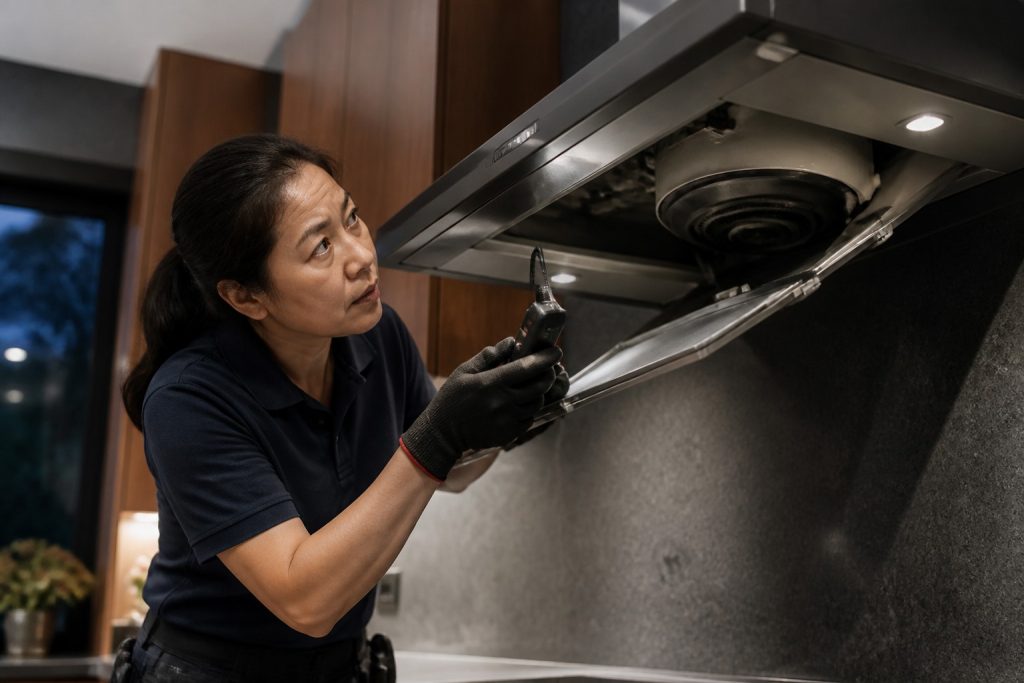
New sounds from a Fisher & Paykel hood usually mean a loose filter, imbalanced blower, or duct resonance—not something to ignore.
Dribbly shots and noisy grinders on Fisher & Paykel coffee makers often share grind, oil, and scale causes.
Share a few details and we’ll confirm an appointment. Prefer to talk? Call us and we’ll help right away.
Fields marked with * are required.