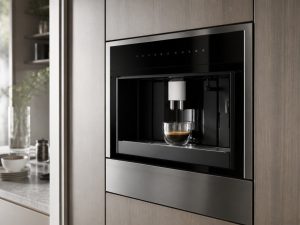
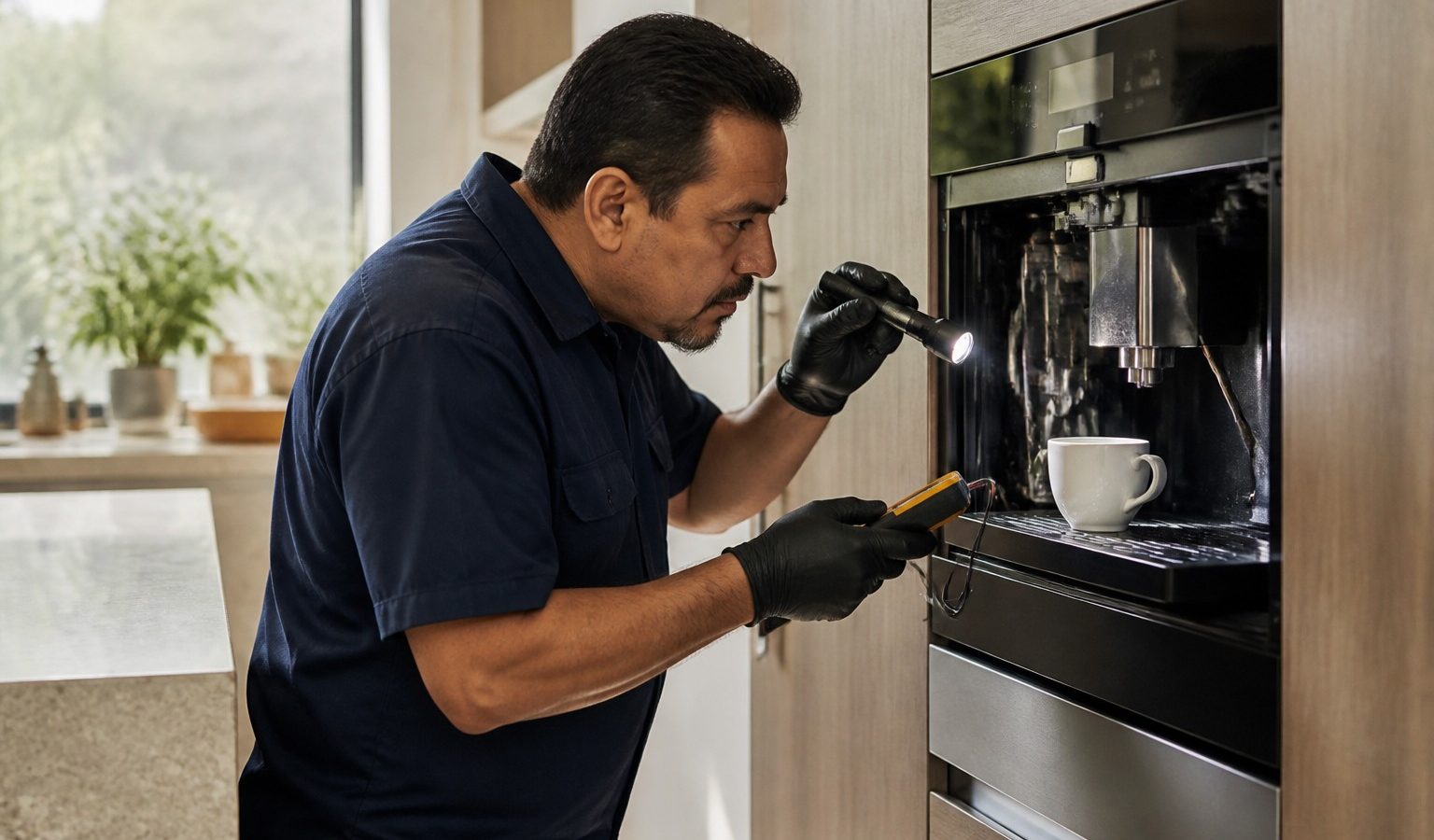
A built-in coffee machine that produces only a small amount can be reacting to maintenance, water delivery, grind/dose conditions, the brew unit, heating, or internal sensing/control issues. The useful sequence is to…
A built-in coffee machine that produces only a small amount can be reacting to maintenance, water delivery, grind/dose conditions, the brew unit, heating, or internal sensing/control issues. The useful sequence is to prove which stage is failing.
Troubleshooting works best when each step answers one question. Change one condition at a time, record the result, and stop before the next step requires internal electrical, gas, sealed-refrigeration, or powered mechanical work.
Complete only the normal cleaning/descaling step due for the exact model.
Use the exact mode, setting, cycle, or zone where the complaint occurs. Do not rely on memory.
Confirm water reservoir or plumbed supply conditions according to the installation.
A comparison can narrow the issue without opening the appliance: one zone versus another, refrigerator versus freezer temperature, fill versus drain, one fan speed versus another, or grinding versus water delivery.
Observe whether grinding, water delivery, heating, and dispensing each occur.
Then reassess. If the symptom remains, repeated resets and random parts replacement are unlikely to add useful information.
If the machine repeatedly stalls, leaks internally, or cannot complete a normal cycle after correct maintenance and water conditions, internal diagnosis is appropriate.
Record the full model number and any displayed code before resetting. Fisher & Paykel reuses codes across appliance families and generations, so code meaning should be matched to the exact appliance/model rather than treated as universal.
Read Built-In Coffee and Built-In Coffee for adjacent symptoms.
Fisher & Paykel has used different product generations, control platforms, and installation formats. The exact model number matters before a technician applies a code meaning, service procedure, or parts reference.
For built-in or integrated built-in coffee installations, cabinet clearances and access can also influence what you see. Leave the appliance installed unless the service team specifically asks you to move it. Unplanned extraction can damage flooring, cabinetry, panels, water connections, gas connections, or wiring.
Write down:
– the complete model number;
– the exact symptom in one sentence;
– when it began;
– whether the symptom is constant or intermittent;
– what related function still works normally;
– any displayed code or message before resetting power;
– any recent cleaning, installation, power, water, gas, or ventilation event.
Those details are often more useful than a guess at the failed part.
Built-in coffee machines combine several stages: grinding or dosing, water delivery, heating, brew-unit movement, dispensing, and waste handling. Record which stage stops or changes. A grinder that runs with no water delivery is a different symptom from water delivery with no coffee output.
Follow only the cleaning, descaling, tray, bean, and user-removable brew-unit procedures intended for the exact model. Internal hydraulic and electrical access is service work.
Do not keep operating an appliance through a leak, gas odor, repeated breaker trip, severe overheating, grinding mechanical condition, or rising refrigeration temperature just to gather more evidence. One clear observation is enough when the next test would increase risk.
Likewise, avoid removing panels, bypassing switches, changing internal adjustments, or ordering parts before the exact model and failure path are confirmed. Protect the original symptom so the technician can test the appliance in the condition that actually needs repair.
Built-in coffee machine not brewing, leaking, or showing a status message? We diagnose Fisher & Paykel EB24-style systems.
Usually one normal manual-approved reset is enough to test whether the state was temporary. If the symptom returns, diagnose the cause.
Yes. Product generation, controls, and installation can change what a symptom or code means.
Prefer the live Fisher & Paykel error-code/model resources tied to the correct appliance family.
An induction surface that will not recognize cookware can be reacting to pan material, pan size, control lock, wet controls, power, or an internal zone/electronic issue. Troubleshooting should…
A new hood noise can come from a loose filter, vibration, duct resonance, grease buildup, a blower imbalance, motor wear, or something contacting the fan. The sound and…
A dry dispenser can be caused by control settings, filter installation, household supply, a kinked line, door/interlock conditions, or internal valves and switches. Following the water path avoids…
Share a few details and we’ll confirm an appointment. Prefer to talk? Call us and we’ll help right away.