DishDrawer performance depends on clean user-accessible filters, clear spray paths, correct loading, and a drain route that is not restricted. A short routine can prevent food debris from becoming a wash or drain…
DishDrawer performance depends on clean user-accessible filters, clear spray paths, correct loading, and a drain route that is not restricted. A short routine can prevent food debris from becoming a wash or drain complaint.
Use the care instructions for the exact model. A maintenance routine should preserve the conditions the appliance needs: airflow, water flow, sealing, clean user-accessible components, correct loading, stable utilities, and reasonable ventilation.
The best maintenance clue is often a change over time: cooling takes longer to recover, a cycle drains more slowly, a hood gets louder, a burner needs more attempts to light, or a coffee machine delivers less volume.
Write down when the change began and what maintenance was performed. That timeline becomes useful if the problem continues.
If washing or draining remains poor after correct filter/loading care, maintenance has reached its limit and the circulation or drain system should be diagnosed.
Cleaning cannot repair a failed motor, control, sensor, valve, heater, refrigeration component, damaged harness, or other internal part.
If the symptom returns, use DishDrawer or DishDrawer to move from maintenance into symptom-based diagnosis.
Fisher & Paykel has used different product generations, control platforms, and installation formats. The exact model number matters before a technician applies a code meaning, service procedure, or parts reference.
For built-in or integrated dishdrawer installations, cabinet clearances and access can also influence what you see. Leave the appliance installed unless the service team specifically asks you to move it. Unplanned extraction can damage flooring, cabinetry, panels, water connections, gas connections, or wiring.
Write down:
– the complete model number;
– the exact symptom in one sentence;
– when it began;
– whether the symptom is constant or intermittent;
– what related function still works normally;
– any displayed code or message before resetting power;
– any recent cleaning, installation, power, water, gas, or ventilation event.
Those details are often more useful than a guess at the failed part.
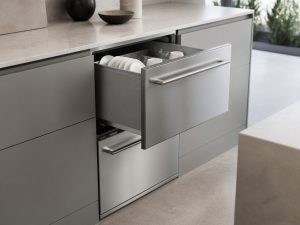
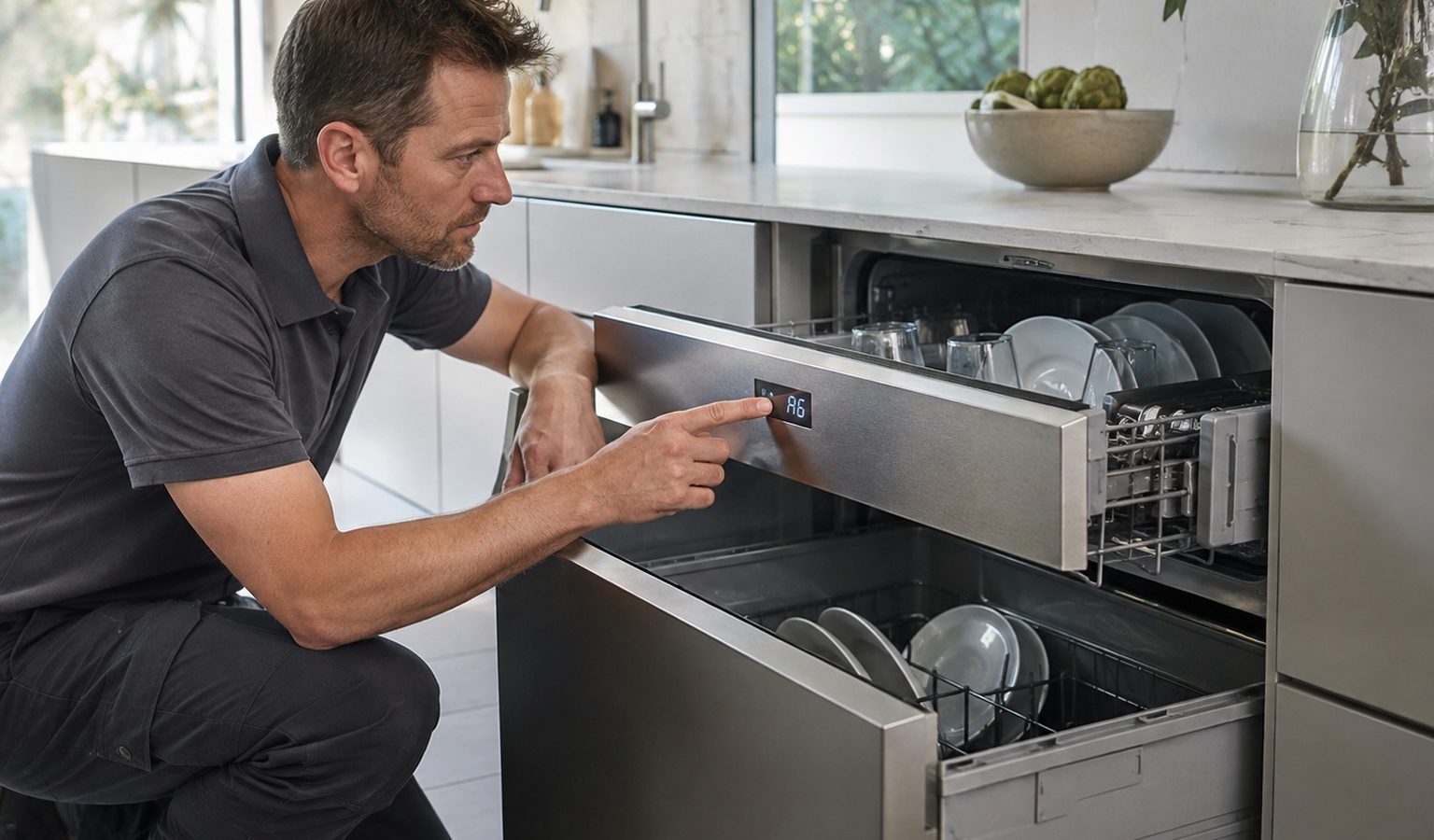
DishDrawer installations deserve an extra note because the drawer, lid, wash system, water inlet, drain path, and cabinetry all interact in a compact space. A symptom in the upper drawer does not automatically prove the lower drawer has the same problem, and vice versa. Record which drawer is affected and whether the other drawer completes the same cycle normally. That comparison can narrow a shared utility problem from a drawer-specific mechanical or control issue.
Do not pull the unit forward just to inspect it. A fitted DishDrawer can have water, drain, electrical, and cabinetry conditions that need to be protected during access.
Do not keep operating an appliance through a leak, gas odor, repeated breaker trip, severe overheating, grinding mechanical condition, or rising refrigeration temperature just to gather more evidence. One clear observation is enough when the next test would increase risk.
Likewise, avoid removing panels, bypassing switches, changing internal adjustments, or ordering parts before the exact model and failure path are confirmed. Protect the original symptom so the technician can test the appliance in the condition that actually needs repair.
DishDrawer not draining, not filling, leaking, or showing a fault code? We diagnose Fisher & Paykel drawer dishwashers.
No. It reduces avoidable problems and makes changes easier to notice, but components still wear or fail.
Use only model-appropriate products and methods. Aggressive chemicals can damage finishes, seals, sensors, filters, or internal materials.
When the same symptom returns after correct maintenance, a code appears, or the next step would require internal electrical, gas, sealed-refrigeration, or powered mechanical work.
Wine storage rewards consistency. Door sealing, ventilation, clean interior surfaces, bottle placement, and stable room conditions help the cabinet maintain temperature without unnecessary compressor run time.
A premium kitchen does not need constant deep cleaning; it needs small product-specific habits done before performance changes. DishDrawer filters, hood filters, refrigerator seals, burner parts, coffee-machine…
A loaded filter raises resistance and can reduce capture performance while increasing noise. Cleaning at a practical interval helps the hood move air as designed and gives you…
Share a few details and we’ll confirm an appointment. Prefer to talk? Call us and we’ll help right away.