A Fisher & Paykel refrigerator that is warming can look like one simple problem, but the pattern matters: fresh-food only, freezer only, both compartments, or a cabinet that cools and then drifts. That pattern changes…
A Fisher & Paykel refrigerator that is warming can look like one simple problem, but the pattern matters: fresh-food only, freezer only, both compartments, or a cabinet that cools and then drifts. That pattern changes the diagnostic direction.
Avoid changing several things at once. If you reset power, clean a filter, change a setting, and move the appliance at the same time, you lose the pattern that could have narrowed the diagnosis.
A visible symptom is the start of diagnosis, not the end. Fisher & Paykel appliances can combine sensors, controls, motors, water paths, gas ignition, ventilation, heaters, or refrigeration systems in ways that make one complaint possible through several causes.
The useful sequence is: prove the symptom, rule out owner-accessible conditions, document the result, and stop before internal testing.
If temperatures keep rising after doors, airflow, settings, and normal recovery time are ruled out, the next step may involve fans, sensors, defrost, controls, or the sealed refrigeration system.
A recurring condition deserves model-aware testing rather than a part ordered from a generic symptom list.
For adjacent symptoms, read Wine Cabinet and Refrigerator.
The technician should reproduce the condition or use your observations to choose a narrow test path. That may mean comparing a sensor with an independent measurement, checking control output, confirming airflow or water flow, or testing a component under operating conditions.
The goal is to replace only what testing supports.
Fisher & Paykel has used different product generations, control platforms, and installation formats. The exact model number matters before a technician applies a code meaning, service procedure, or parts reference.
For built-in or integrated refrigerator installations, cabinet clearances and access can also influence what you see. Leave the appliance installed unless the service team specifically asks you to move it. Unplanned extraction can damage flooring, cabinetry, panels, water connections, gas connections, or wiring.
Write down:
– the complete model number;
– the exact symptom in one sentence;
– when it began;
– whether the symptom is constant or intermittent;
– what related function still works normally;
– any displayed code or message before resetting power;
– any recent cleaning, installation, power, water, gas, or ventilation event.
Those details are often more useful than a guess at the failed part.
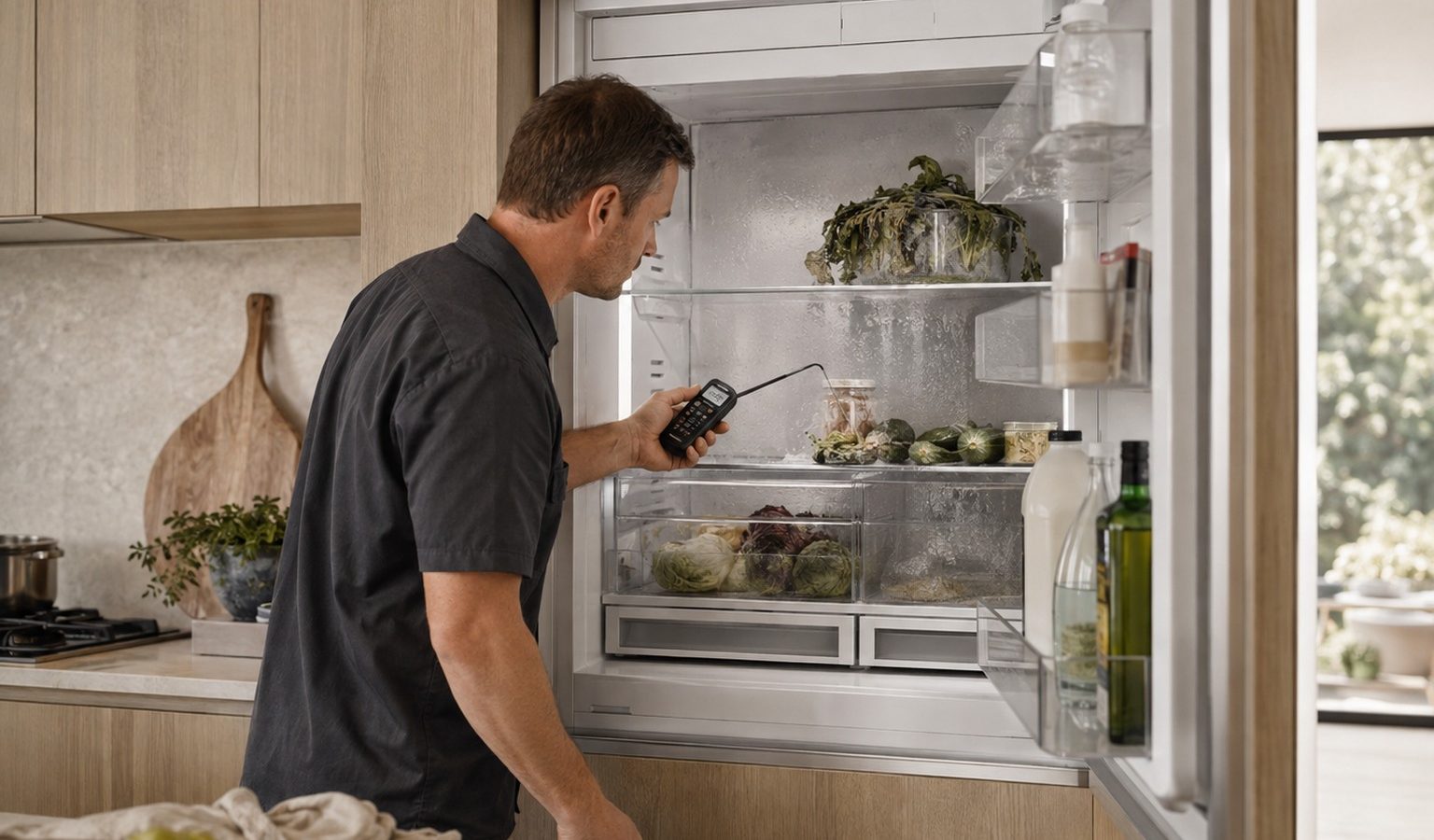
For Fisher & Paykel refrigeration, measured temperature is more valuable than a quick touch test. Note the fresh-food and freezer compartments separately, because a warm refrigerator with a cold freezer points in a different direction from both compartments warming together.
Integrated and ActiveSmart-style installations also depend on clear ventilation and correct door closure. If the appliance is panel-ready, tell the service team about custom panels or alignment concerns before the visit rather than adjusting hinges or cabinetry yourself.
Do not keep operating an appliance through a leak, gas odor, repeated breaker trip, severe overheating, grinding mechanical condition, or rising refrigeration temperature just to gather more evidence. One clear observation is enough when the next test would increase risk.
Likewise, avoid removing panels, bypassing switches, changing internal adjustments, or ordering parts before the exact model and failure path are confirmed. Protect the original symptom so the technician can test the appliance in the condition that actually needs repair.
Losing cooling, building frost, or pooling water? We diagnose Fisher & Paykel refrigerator faults and restore calm, consistent temperatures.
One normal manual-approved restart can be useful after a temporary control interruption. If the same symptom returns, repeated resets are not a repair.
Usually no. Similar symptoms can come from different components or installation conditions.
Not unless the service team asks. Built-in access can involve panels, flooring, gas, water, ventilation, or electrical connections.
Continuous clicking is often noticed after cleaning or a spill, but the cause is not always the spark module. Wet components, a cap that is not seated correctly,…
When one side of a tray browns faster, the first job is to decide whether the pattern follows pan position, rack position, mode, door opening, airflow, or the…
Weak extraction can come from loaded filters, blocked ducting, poor make-up air, an incorrect fan setting, a loose or restricted duct path, or a blower/control problem. Smoke that…
Share a few details and we’ll confirm an appointment. Prefer to talk? Call us and we’ll help right away.