Continuous clicking is often noticed after cleaning or a spill, but the cause is not always the spark module. Wet components, a cap that is not seated correctly, contamination around the igniter, or a switch/ignition…
Continuous clicking with no flame after cleaning or a spill can come from moisture or a burner cap that is not sitting flat, which are both things you can check without tools. If the burner is dry, correctly assembled, and still clicks without lighting, the ignition system needs testing. Do not keep cycling the control while you wait for it to catch.
Continuous clicking is often noticed after cleaning or a spill, but the cause is not always the spark module. Wet components, a cap that is not seated correctly, contamination around the igniter, or a switch/ignition problem can create similar behavior.
Avoid changing several things at once. If you reset power, clean a filter, change a setting, and move the appliance at the same time, you lose the pattern that could have narrowed the diagnosis.
| Symptom | What it can point to | What you can check |
|---|---|---|
| Clicks after the burner was washed | Water left in the cap or burner base | Let the parts dry fully and refit them dry |
| Clicks after a spill dried on | Clogged flame ports or a dirty ignitor | Clean the burner parts as the manual describes |
| Clicks, then a weak or uneven flame | Wet or partly blocked burner parts | Dry and clean the parts, then reseat the cap |
| Clicks and the dial does not seem to catch | The dial not turned fully to HI | Turn off, wait a minute, then press and turn fully to HI |
| Clicks on one burner only | A problem local to that burner | Compare with a burner that lights normally |
A visible symptom is the start of diagnosis, not the end. Fisher & Paykel appliances can combine sensors, controls, motors, water paths, gas ignition, ventilation, heaters, or refrigeration systems in ways that make one complaint possible through several causes.
The useful sequence is: prove the symptom, rule out owner-accessible conditions, document the result, and stop before internal testing.
If the clicking remains after the burner is dry and correctly assembled, or if the spark is absent or erratic, the ignition system should be tested rather than repeatedly cycled.
A recurring condition deserves model-aware testing rather than a part ordered from a generic symptom list.
For adjacent symptoms, read Oven and Oven.
The technician should reproduce the condition or use your observations to choose a narrow test path. That may mean comparing a sensor with a measurement, checking control output, confirming airflow or water flow, or testing a component under operating conditions.
The goal is to replace only what testing supports.
The guide for one gas-on-steel cooktop gives these causes for clicking with no flame: the dial not fully at HI, a dirty or wet ignitor, a gas supply that is off at the valve or bottle or a house supply that is not working, clogged or wet burner parts, and a burner cap that is not seated flat.
The guide also says ignitors spark when the dial is pressed and turned to HI, so clicking itself tells you the spark is being asked for. It does not tell you whether a flame can form. For cleaning, it asks for ignitors to be cleaned at least monthly with a toothbrush dipped in denatured alcohol, and for burner parts to stay dry because wet ones cause an irregular flame.
No. Repeated attempts on a burner that will not light can let unburned gas collect, so stop and follow the guide’s gas-smell steps if you notice an odor.
Repeated attempts on a burner that will not light can let unburned gas collect. If you smell gas, follow the guide’s instruction not to light any appliance or touch electrical switches, and call the gas supplier from a neighbor’s phone. A guide for your own model is the final word on that wording.
Fisher & Paykel has used different product generations, control platforms, and installation formats. The exact model number matters before a technician applies a code meaning, service procedure, or parts reference.
For built-in or integrated gas cooktop installations, cabinet clearances and access can also influence what you see. Leave the appliance installed unless the service team specifically asks you to move it. Unplanned extraction can damage flooring, cabinetry, panels, water connections, gas connections, or wiring.
Write down:
– the complete model number;
– the exact symptom in one sentence;
– when it began;
– whether the symptom is constant or intermittent;
– what related function still works normally;
– any displayed code or message before resetting power;
– any recent cleaning, installation, power, water, gas, or ventilation event.
Those details are often more useful than a guess at the failed part.
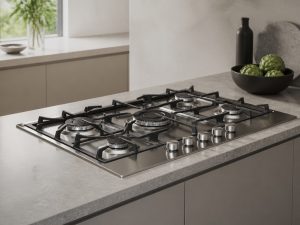
Gas cooking complaints need both symptom detail and a clear safety boundary. Identify the affected burner, whether the spark is present, whether the flame is delayed, and whether another burner behaves normally. That comparison helps distinguish a local burner assembly issue from a broader ignition or gas-supply problem.
Do not adjust internal valves, regulators, switches, or gas pressure. If gas odor persists, stop normal troubleshooting and follow appropriate gas-safety guidance.
Do not keep operating an appliance through a leak, gas odor, repeated breaker trip, severe overheating, grinding mechanical condition, or rising refrigeration temperature just to gather more evidence. One clear observation is enough when the next test would increase risk.
Likewise, avoid removing panels, bypassing switches, changing internal adjustments, or ordering parts before the exact model and failure path are confirmed. Protect the original symptom so the technician can test the appliance in the condition that actually needs repair.
The guide says wet burner parts and wet ignitors can stop a flame from forming. Let everything dry fully, and refit the cap so it sits flat.
The guide for one gas cooktop says to turn the burner off and wait 1 minute for gas to disperse before trying again with the dial fully at HI.
Yes. The guide lists a dirty or wet ignitor among its causes and asks for monthly cleaning with denatured alcohol on a toothbrush, with the parts kept dry.
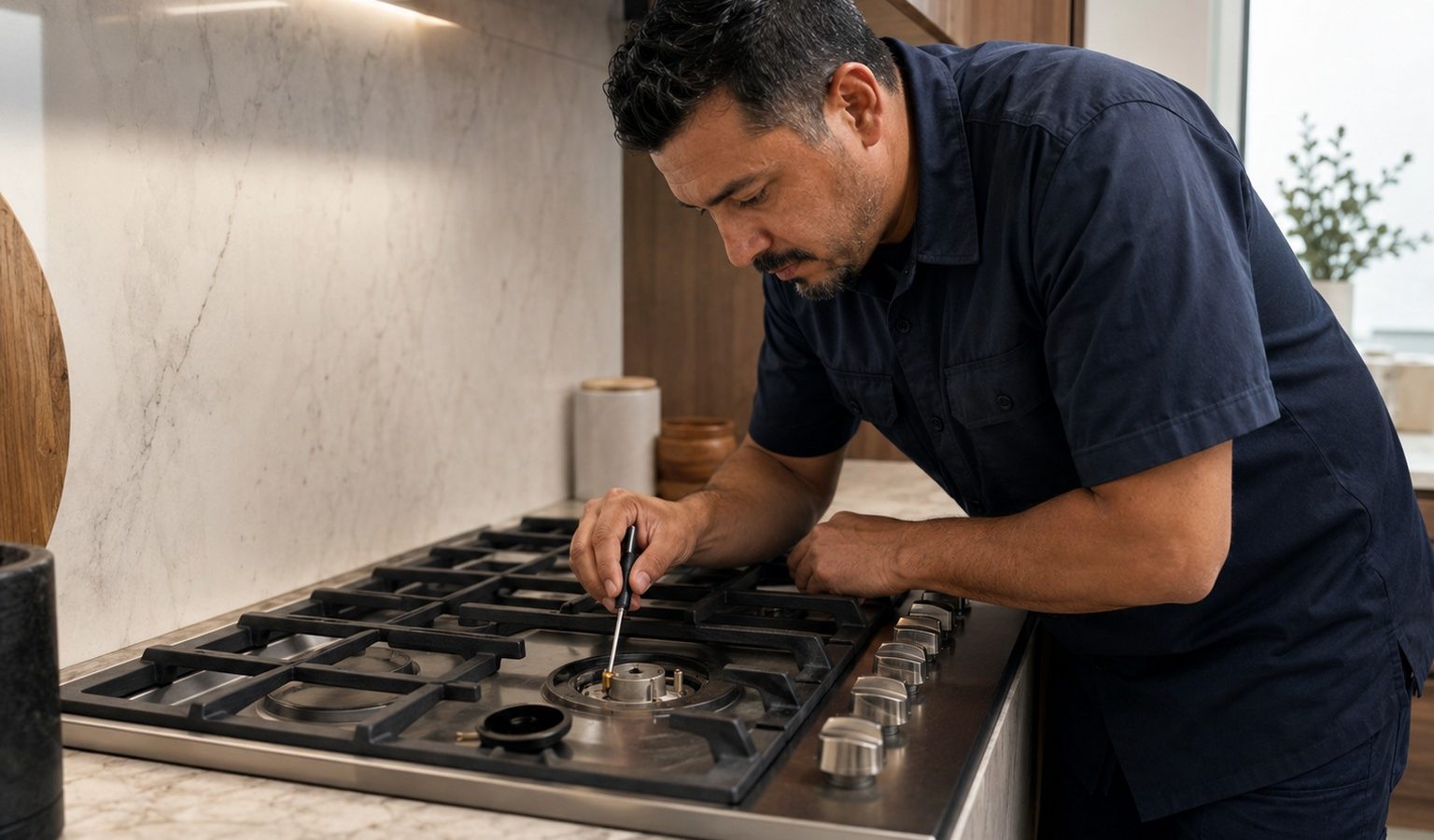
Gas burners clicking without ignition or heating unevenly? We diagnose Fisher & Paykel gas cooktops safely.
One normal manual-approved restart can be useful after a temporary control interruption. If the same symptom returns, repeated resets are not a repair.
Usually no. Similar symptoms can come from different components or installation conditions.
Not unless the service team asks. Built-in access can involve panels, flooring, gas, water, ventilation, or electrical connections.
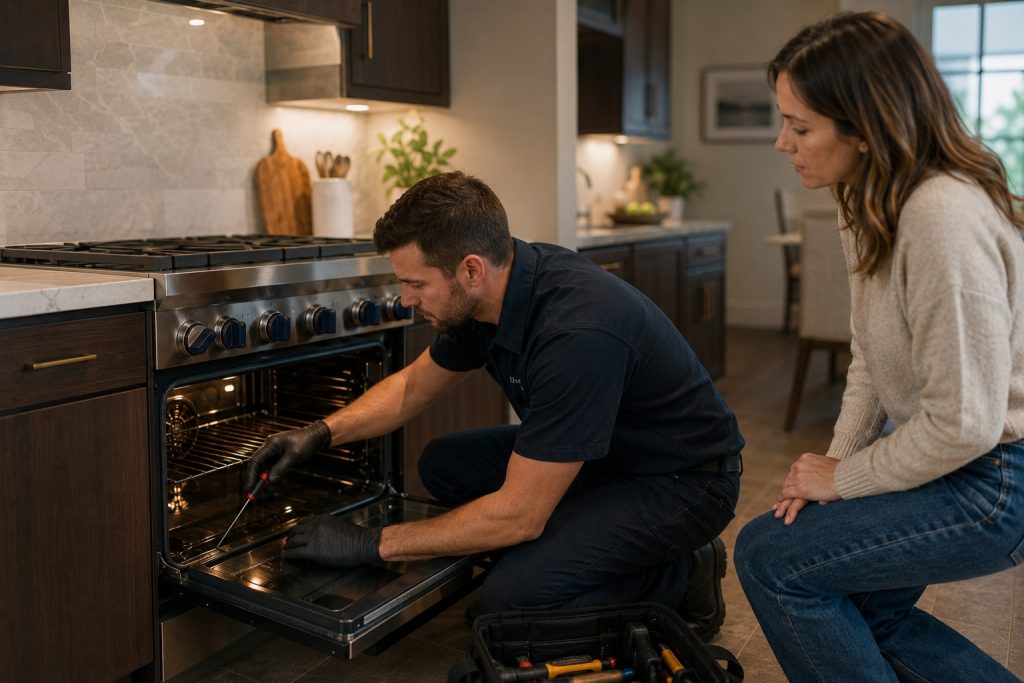
When one side of a tray browns faster, the first job is to decide whether the pattern follows pan position, rack position, mode, door opening, airflow, or the…
Weak extraction can come from loaded filters, blocked ducting, poor make-up air, an incorrect fan setting, a loose or restricted duct path, or a blower/control problem. Smoke that…
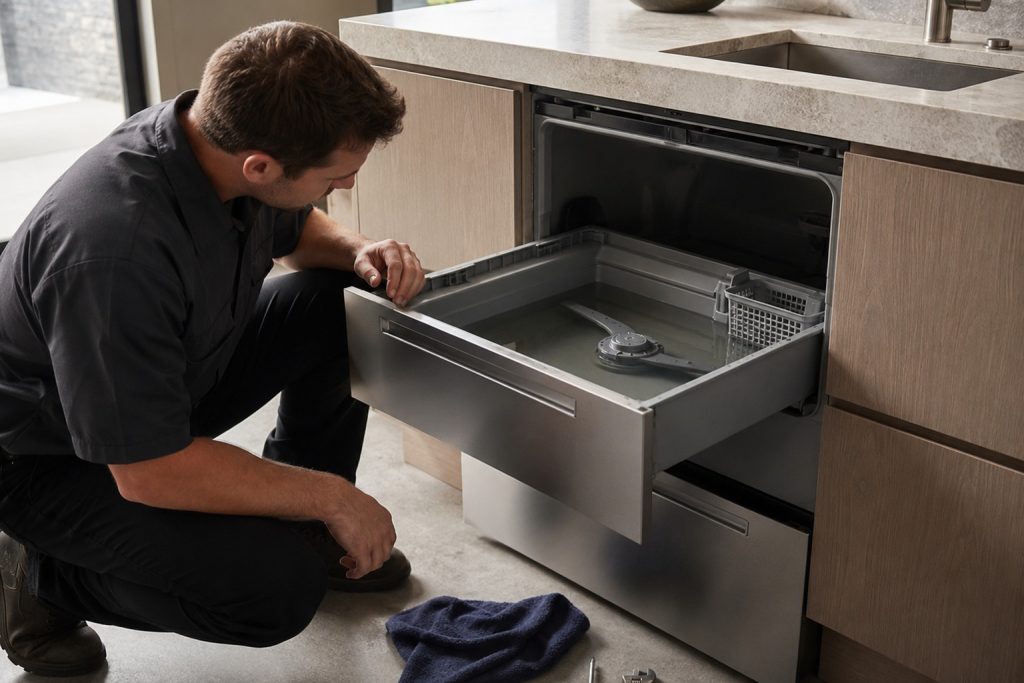
A DishDrawer that finishes with standing water can point to a filter restriction, drain path problem, sink connection, pump obstruction, or a control issue. The useful clue is…
Share a few details and we’ll confirm an appointment. Prefer to talk? Call us and we’ll help right away.