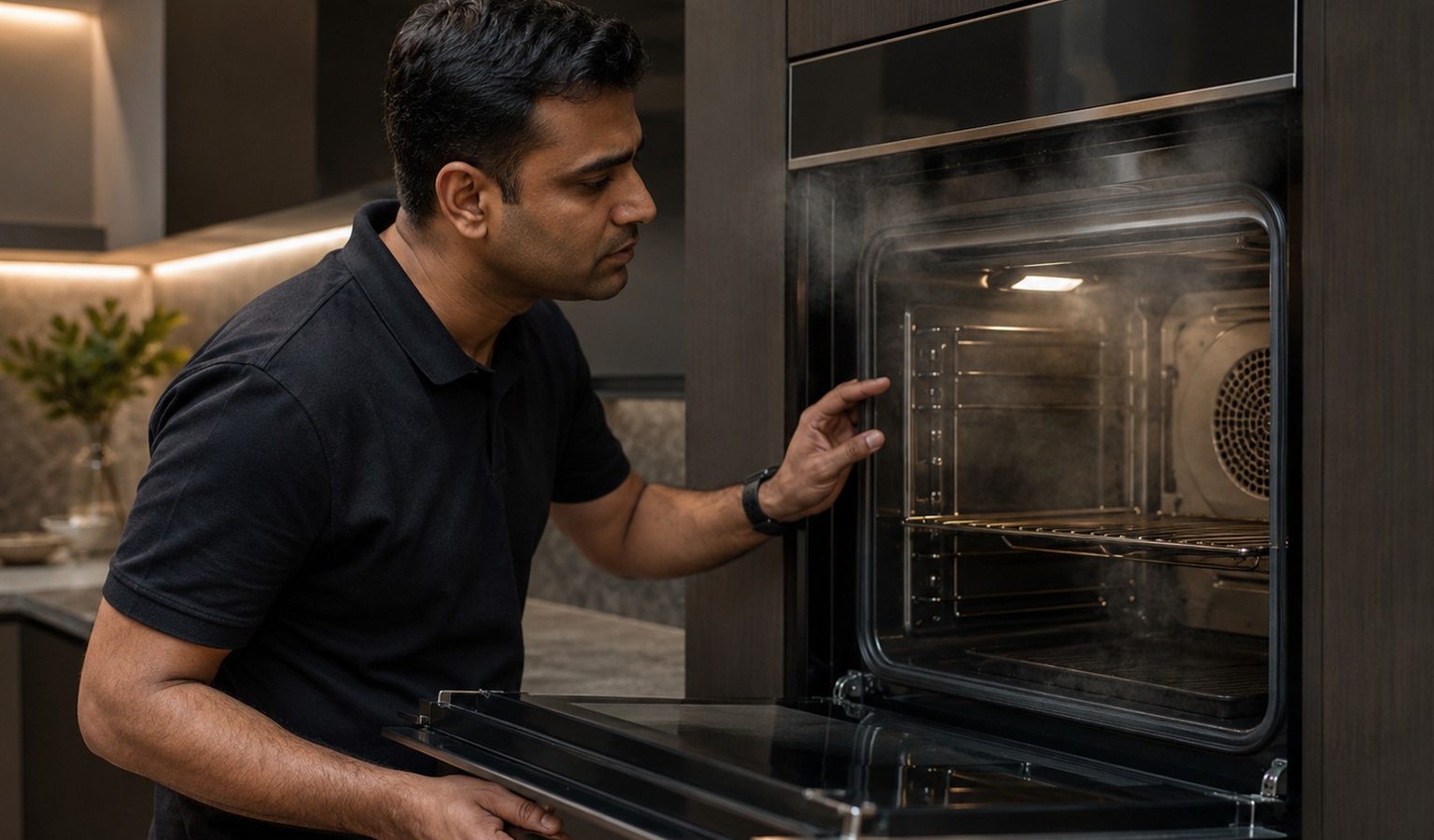
An induction surface can reduce power or shut down when electronics, glass, cookware, or ventilation conditions exceed a safe operating range. Repeatedly restoring power without finding the heat source can turn a…
When an induction cooktop reduces power or shuts off to protect itself, treat it as a signal to let it cool and look at what was sitting on it. Hot cookware along the front of the cooktop is one documented cause in the guide for one Fisher & Paykel model. If the shutoffs keep returning with cookware moved and the surface cooled, stop using it until it has been diagnosed.
An induction surface can reduce power or shut down when electronics, glass, cookware, or ventilation conditions exceed a safe operating range. Repeatedly restoring power without finding the heat source can turn a protective event into a recurring risk.
It is protecting itself from heat. Let the surface cool, take off the cookware and look at where the pans were sitting; shutoffs that keep returning need diagnosis.
| Symptom | What it can point to | What you can check |
|---|---|---|
| Display goes black | The cooktop turned off to protect the display after cookware sat along the front | Remove the cookware, let the controls cool, and use the rear zones |
| Power is lower than the setting | The cooktop reducing power to prevent overheating | Wait for it to cool |
| Chosen heat cannot be set | Maximum power already in use, or BOOST not available with paired zones | Check the zone pairing and what else is running |
| A zone turned off after a long time | The safety timeout when the power level was not changed | Restart the zone |
| Repeated E code | An electronics fault the cooktop is reporting | Use the documented off-and-on reset once, then stop and seek service |
The checks should stay owner-accessible and model-appropriate. Do not remove live electrical panels, bypass door or lid switches, work on internal gas components, open sealed refrigeration systems, or remove a microwave/coffee-machine electrical enclosure just to “see what is wrong.”
If the cooktop repeatedly overheats, trips the breaker, smells electrically hot, or shows recurring protective messages, stop using it until the power/ventilation/electronic system is diagnosed.
Other stop conditions include smoke, sparking, burning electrical odor, repeated breaker trips, uncontrolled overheating, persistent unburned gas odor, or water reaching electrical connections.
A problem that disappears after cooling or a reset can still require service if the same safety symptom returns.
The guide for one modular induction cooktop says the cooktop turns off to protect the display if it overheats, and that it can reduce power to prevent overheating. It also notes that hot cookware placed along the front may overheat the controls, and suggests using rear or paired zones for larger cookware. A shutoff is therefore evidence about what happened in the last few minutes, and it does not by itself mean a failed part.
That is also why a one-time shutoff after heavy cooking differs from one that repeats on light use. The first may match the cookware placement the guide describes. The second does not, and it deserves diagnosis.
If water is present, limit spread into flooring/cabinetry without reaching into energized spaces. If an appliance is very hot, allow safe cooling instead of forcing a latch or panel. If gas odor persists, do not continue ignition testing.
Photograph any displayed code or warning before power is removed when it is safe to do so.
Read Oven and Gas Cooktop for related context.
For E fault codes, the guide describes pressing and holding the power button to turn the cooktop off, waiting a few seconds, and turning it back on. If the code persists, it says to switch the power off and on at the wall, then note the code and contact Customer Care. That is a single reset, not a loop to repeat. The guide also says to stop using the cooktop and turn off power at the wall if the glass is cracked or chipped. It describes humming on high heat or BOOST, and crackling from layered cookware, as normal, so those sounds alone are not a reason to stop.
Fisher & Paykel has used different product generations, control platforms, and installation formats. The exact model number matters before a technician applies a code meaning, service procedure, or parts reference.
For built-in or integrated induction cooktop installations, cabinet clearances and access can also influence what you see. Leave the appliance installed unless the service team specifically asks you to move it. Unplanned extraction can damage flooring, cabinetry, panels, water connections, gas connections, or wiring.
Write down:
– the complete model number;
– the exact symptom in one sentence;
– when it began;
– whether the symptom is constant or intermittent;
– what related function still works normally;
– any displayed code or message before resetting power;
– any recent cleaning, installation, power, water, gas, or ventilation event.
Those details are often more useful than a guess at the failed part.
Induction diagnosis begins with cookware and zone pattern. A pan that works on one zone but not another provides different evidence from cookware that is ignored everywhere. Record which zones respond and whether the controls show a lock, heat, or code indication.
Do not remove the glass or access power modules. Induction electronics operate at hazardous voltages and require model-specific service procedures.
Do not keep operating an appliance through a leak, gas odor, repeated breaker trip, severe overheating, grinding mechanical condition, or rising refrigeration temperature just to gather more evidence. One clear observation is enough when the next test would increase risk.
Likewise, avoid removing panels, bypassing switches, changing internal adjustments, or ordering parts before the exact model and failure path are confirmed. Protect the original symptom so the technician can test the appliance in the condition that actually needs repair.
The guide for one model attributes it to overheating from cookware along the front of the cooktop and says to remove it or move to rear zones and let the controls cool.
After cooling, yes, with the cookware moved. If the shutoff repeats, the repeated restoration is the problem and the cooktop should be diagnosed first.
No. The guide describes humming on high heat or BOOST as normal.
Induction zone not heating or detecting cookware? We diagnose Fisher & Paykel induction cooktops precisely.
Not when the intermittent condition involves gas odor, smoke, sparking, burning smell, water near electricity, severe overheating, or repeated breaker trips.
No. Internal electrical testing is not a homeowner check.
Record what happened. If the safety-related symptom returns, do not rely on repeated resets.
A burner that clicks without lighting may have a wet or mis-seated cap, but persistent gas odor changes the situation immediately. The goal is not to keep testing…
Built-in coffee machines combine water, heaters, pumps, controls, and mains power in a compact cabinet. A drip tray that needs emptying is different from unexplained water inside cabinetry…
A small amount of water in a normal sump area is different from water escaping into cabinetry or reaching electrical connections. When water leaves the drawer or base…
Share a few details and we’ll confirm an appointment. Prefer to talk? Call us and we’ll help right away.