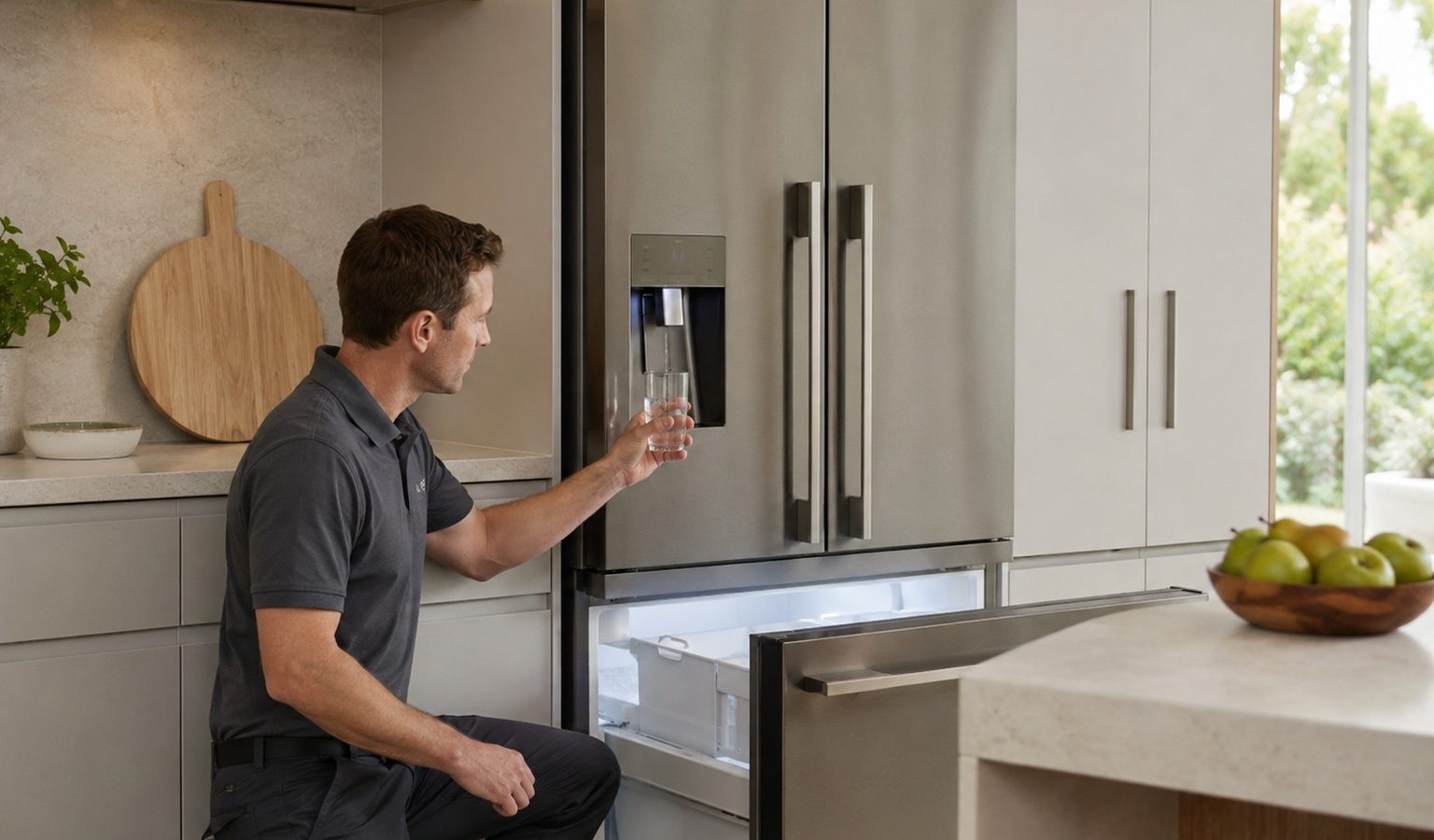
A refrigerator cooling problem becomes a food-storage decision before it becomes a parts decision. The first priority is to confirm temperature and protect perishable food while you determine whether the cabinet is…
A refrigerator cooling problem becomes a food-storage decision before it becomes a parts decision. The first priority is to confirm temperature and protect perishable food while you determine whether the cabinet is recovering.
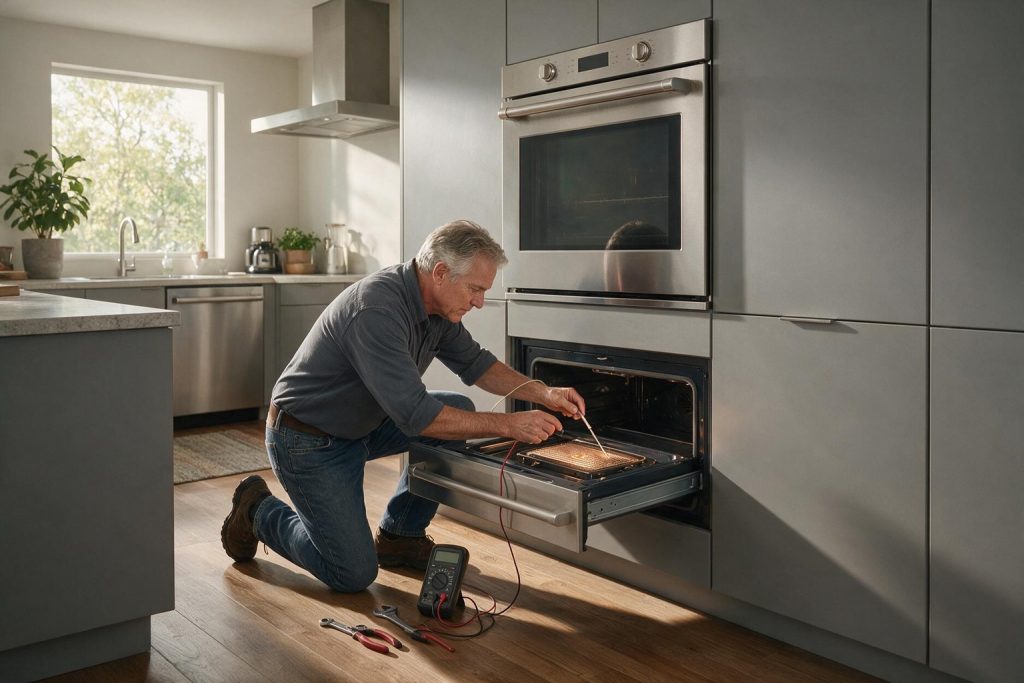
The checks should stay owner-accessible and model-appropriate. Do not remove live electrical panels, bypass door or lid switches, work on internal gas components, open sealed refrigeration systems, or remove a microwave/coffee-machine electrical enclosure just to “see what is wrong.”
Do not bypass fans, switches, sensors, or electrical controls to keep food cold. If cooling does not recover after safe external checks, arrange diagnosis.
Other stop conditions include smoke, sparking, burning electrical odor, repeated breaker trips, uncontrolled overheating, persistent unburned gas odor, or water reaching electrical connections.
A problem that disappears after cooling or a reset can still require service if the same safety symptom returns.
If water is present, limit spread into flooring/cabinetry without reaching into energized spaces. If an appliance is very hot, allow safe cooling instead of forcing a latch or panel. If gas odor persists, do not continue ignition testing.
Photograph any displayed code or warning before power is removed when it is safe to do so.
Read Refrigerator and Wine Cabinet for related context.
Fisher & Paykel has used different product generations, control platforms, and installation formats. The exact model number matters before a technician applies a code meaning, service procedure, or parts reference.
For built-in or integrated refrigerator installations, cabinet clearances and access can also influence what you see. Leave the appliance installed unless the service team specifically asks you to move it. Unplanned extraction can damage flooring, cabinetry, panels, water connections, gas connections, or wiring.
Write down:
– the complete model number;
– the exact symptom in one sentence;
– when it began;
– whether the symptom is constant or intermittent;
– what related function still works normally;
– any displayed code or message before resetting power;
– any recent cleaning, installation, power, water, gas, or ventilation event.
Those details are often more useful than a guess at the failed part.
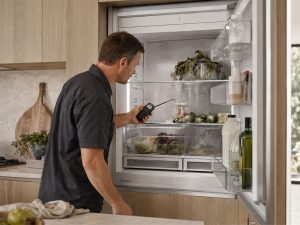
For Fisher & Paykel refrigeration, measured temperature is more valuable than a quick touch test. Note the fresh-food and freezer compartments separately, because a warm refrigerator with a cold freezer points in a different direction from both compartments warming together.
Integrated and ActiveSmart-style installations also depend on clear ventilation and correct door closure. If the appliance is panel-ready, tell the service team about custom panels or alignment concerns before the visit rather than adjusting hinges or cabinetry yourself.
Do not keep operating an appliance through a leak, gas odor, repeated breaker trip, severe overheating, grinding mechanical condition, or rising refrigeration temperature just to gather more evidence. One clear observation is enough when the next test would increase risk.
Likewise, avoid removing panels, bypassing switches, changing internal adjustments, or ordering parts before the exact model and failure path are confirmed. Protect the original symptom so the technician can test the appliance in the condition that actually needs repair.
Losing cooling, building frost, or pooling water? We diagnose Fisher & Paykel refrigerator faults and restore calm, consistent temperatures.
Not when the intermittent condition involves gas odor, smoke, sparking, burning smell, water near electricity, severe overheating, or repeated breaker trips.
No. Internal electrical testing is not a homeowner check.
Record what happened. If the safety-related symptom returns, do not rely on repeated resets.
A burner that clicks without lighting may have a wet or mis-seated cap, but persistent gas odor changes the situation immediately. The goal is not to keep testing…
Built-in coffee machines combine water, heaters, pumps, controls, and mains power in a compact cabinet. A drip tray that needs emptying is different from unexplained water inside cabinetry…
An induction surface can reduce power or shut down when electronics, glass, cookware, or ventilation conditions exceed a safe operating range. Repeatedly restoring power without finding the heat…
Share a few details and we’ll confirm an appointment. Prefer to talk? Call us and we’ll help right away.